 DutyPilot
Landed Cost: E-commerce Profitability's Secret Weapon
Master calculating landed cost for e-commerce success. Unlock hidden profits, avoid customs surprises, and boost your bottom line. Start today!
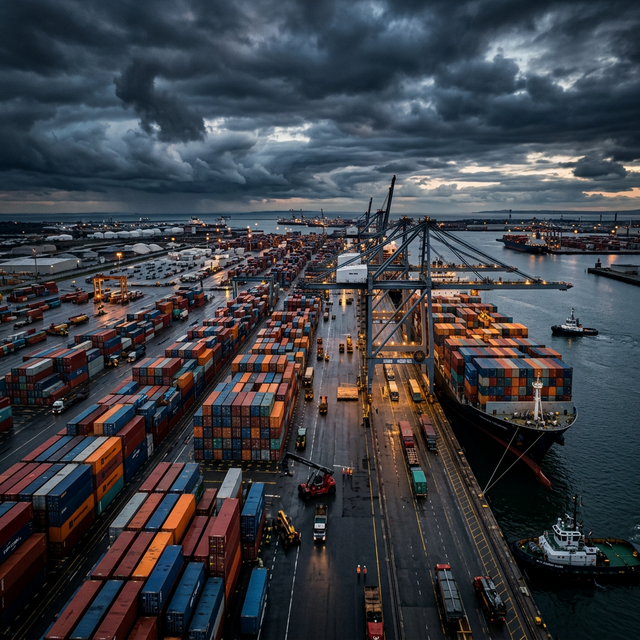
Calculating landed cost is critical for e-commerce businesses to accurately determine profitability and price products competitively in international markets, as neglecting these costs can lead to significant financial losses and pricing errors.
Understanding Landed Cost for E-commerce
For e-commerce businesses engaged in cross-border trade, calculating landed cost is more than just an accounting exercise—it's a fundamental pillar of profitability, compliance, and competitive pricing. Landed cost represents the total expense associated with getting a product from the supplier's door to the customer's doorstep. This encompasses not only the purchase price but also a complex web of shipping, duties, taxes, insurance, and other often-overlooked fees.
Failing to accurately calculate landed cost can lead to:
- Profit margin erosion: Underestimating costs leads to underpricing, squeezing your profits.
- Cash flow surprises: Unexpected duties or fees can disrupt your financial planning.
- Compliance issues: Incorrect declarations can result in penalties and delays.
- Competitive disadvantage: Inaccurate pricing makes it difficult to compete effectively in global markets.
Our analysis shows that many e-commerce businesses, especially those new to cross-border trade, underestimate landed costs by as much as 20-30%, leading to significant financial setbacks. We've seen countless businesses struggle with unexpected expenses, compliance issues, and ultimately, reduced profitability.
Key Components of Landed Cost
To accurately calculate landed cost, you need to consider all relevant expenses. Here's a breakdown of the key components:
- Product Cost: The initial price of the goods purchased from the supplier.
- Shipping Costs: Charges for transporting the goods, including freight, fuel surcharges, and handling fees. This can vary widely depending on the carrier (e.g., FedEx, UPS, DHL), shipping method (air, sea, ground), and distance.
- Insurance: Cost to protect the goods against loss or damage during transit.
- Import Duties: Taxes imposed by the importing country's customs authority. These are typically calculated as a percentage of the declared value of the goods, based on the Harmonized System (HS) code.
- Taxes: Value Added Tax (VAT), Goods and Services Tax (GST), or other consumption taxes levied by the importing country.
- Customs Clearance Fees: Charges for processing the goods through customs, including brokerage fees and inspection costs.
- Other Fees: Additional expenses such as currency exchange fees, port fees, and warehousing costs.
Finding the Correct HS Code
A critical step in calculating landed cost is identifying the correct HS code for your product. The HS code is a standardized system of names and numbers used worldwide to classify traded products. It's used by customs authorities to determine the applicable duty rates and taxes.
Incorrect HS code classification can lead to:
- Overpayment of duties: You might pay a higher duty rate than necessary.
- Underpayment of duties: This can result in penalties, interest charges, and even seizure of goods.
- Delays in customs clearance: Incorrect documentation can cause significant delays.
You can use resources like the Tariff Number database or the official websites of customs authorities in your target markets to find the correct HS code. For example, the U.S. International Trade Commission (USITC) provides a searchable database of HS codes and duty rates (https://hts.usitc.gov/).
💡 Expert Tip: When in doubt, consult with a customs broker or a trade compliance specialist to ensure accurate HS code classification. A small investment in expert advice can save you thousands of dollars in the long run. A 2023 study found that businesses using professional HS code classification services reduced their duty overpayments by an average of 12%.
Calculating Landed Cost: Step-by-Step
Let's walk through a step-by-step example of how to calculate landed cost:
- Determine the Product Cost: Let's say you're importing 500 units of a product at $20 per unit. Your product cost is $10,000.
- Calculate Shipping Costs: Obtain quotes from different carriers for shipping the goods. Assume the shipping cost is $1,500.
- Factor in Insurance: Calculate the cost of insurance based on the value of the goods and the shipping terms. Let's say insurance costs $100.
- Identify the HS Code and Duty Rate: Find the correct HS code for your product and determine the applicable duty rate in the importing country. For example, if the duty rate is 5%, the duty amount would be 5% of $10,000 = $500.
- Calculate Taxes: Determine the applicable VAT or GST rate in the importing country. If the VAT rate is 20%, it's applied to the sum of the product cost, shipping costs, insurance, and duties: 20% of ($10,000 + $1,500 + $100 + $500) = $2,420.
- Estimate Customs Clearance Fees: Obtain quotes from customs brokers for clearing the goods through customs. Assume the customs clearance fees are $200.
- Add Other Fees: Include any other relevant fees, such as currency exchange fees or port fees. Let's say these fees amount to $50.
- Calculate Total Landed Cost: Sum up all the costs: $10,000 (Product Cost) + $1,500 (Shipping) + $100 (Insurance) + $500 (Duties) + $2,420 (VAT) + $200 (Customs Clearance) + $50 (Other Fees) = $14,770
- Calculate Landed Cost Per Unit: Divide the total landed cost by the number of units: $14,770 / 500 = $29.54 per unit.
Therefore, the landed cost per unit for your product is $29.54. This is the true cost of getting the product to your customer's doorstep and should be used to determine your pricing strategy.
Tools and Resources for Calculating Landed Cost
Several tools and resources can help you streamline the process of calculating landed cost:
- DutyPilot: (Of course!) Our platform provides a comprehensive solution for calculating landed cost, including duty and tax calculations, HS code lookup, and customs compliance tools. Unlike Zonos, which primarily focuses on checkout integration, DutyPilot offers a broader suite of tools for managing cross-border e-commerce operations from start to finish. We also offer more transparent pricing than Avalara, which often requires enterprise-level contracts for access to their full suite of features.
- Import Duty Calculators: Online tools like the SimplyDuty calculator can help you estimate duties and taxes. However, be aware that these calculators may not always be accurate and should be used as a starting point.
- Customs Brokers: A customs broker can provide expert assistance with HS code classification, duty calculations, and customs clearance.
- Freight Forwarders: Freight forwarders can help you find the most cost-effective shipping options and manage the logistics of international transportation.
💡 Expert Tip: Integrate landed cost calculations into your e-commerce platform or ERP system to automate the process and ensure accuracy. This can save you significant time and reduce the risk of errors. Consider using APIs to connect DutyPilot with your existing systems for seamless data integration.
Landed Cost Calculation: Choosing the Right Method
Different e-commerce businesses use varying methods to calculate landed costs. Here's a quick comparison:
| Method | Description | Pros | Cons |
|---|---|---|---|
| Manual Calculation | Calculating landed cost using spreadsheets and manual data entry. | Simple, low-cost to start. | Time-consuming, prone to errors, difficult to scale. |
| Online Calculators | Using online tools and calculators to estimate landed cost. | Quick, easy to use, provides a general estimate. | May not be accurate, lacks customization, limited features. |
| Software Solutions | Using dedicated software platforms like DutyPilot to automate landed cost calculations. | Accurate, efficient, customizable, scalable, integrates with other systems. | Higher upfront cost, requires some training. |
| Customs Brokers | Outsourcing landed cost calculations to a customs broker. | Expertise, accuracy, compliance. | Higher cost, less control, potential delays. |
Why DutyPilot vs. Competitors for Landed Cost Calculation?
While several solutions exist for calculating landed cost, DutyPilot offers a unique combination of features, accuracy, and affordability that sets it apart from the competition. Here's a comparison:
| Feature | DutyPilot | Avalara | TaxJar | Zonos |
|---|---|---|---|---|
| Landed Cost Calculation | Comprehensive, real-time calculations | Comprehensive, but pricing opaque | Limited to sales tax, weak on import duties | Checkout-focused, less comprehensive |
| HS Code Lookup | Integrated, accurate HS code database | Available, but requires separate subscription | Not a core feature | Integrated |
| Customs Compliance Tools | Extensive compliance resources and support | Compliance tools available, but complex | Limited compliance support | Limited compliance focus |
| Pricing | Transparent, affordable pricing plans | Complex, enterprise-focused pricing | Pricing based on sales volume | Pricing based on transaction volume |
| Ease of Use | User-friendly interface, easy to navigate | Complex interface, requires training | Simple interface, but limited features | Simple interface, but limited features |
As you can see, DutyPilot provides a more comprehensive and user-friendly solution for calculating landed cost than many of its competitors. While TaxJar focuses primarily on U.S. sales tax, DutyPilot offers a global perspective, covering import duties, VAT, and other international taxes. Unlike Avalara, DutyPilot's pricing is transparent and accessible to businesses of all sizes. And while Zonos excels at checkout integration, DutyPilot provides a broader suite of tools for managing your entire cross-border e-commerce operation.
FAQ: Landed Cost in E-commerce
- What is included in landed cost?
- Landed cost includes the original price of the product, shipping fees, insurance costs, import duties, taxes (such as VAT or GST), customs clearance fees, and any other expenses incurred to get the product to the final destination. For example, a $50 product might incur $15 in shipping, $5 in insurance, $10 in duties, and $10 in taxes, resulting in a landed cost of $90.
- How does landed cost impact e-commerce profitability?
- Landed cost directly impacts e-commerce profitability by affecting pricing strategies and profit margins. If a business underestimates landed cost, it may underprice its products, leading to reduced profits or even losses. Accurately calculating landed cost ensures that products are priced competitively while maintaining healthy profit margins, contributing to sustainable business growth.
- Why is HS code classification important for landed cost?
- HS code classification is crucial because it determines the applicable duty rates and taxes for imported products. An incorrect HS code can result in overpayment or underpayment of duties, leading to financial losses or penalties. Accurate HS code classification ensures compliance with customs regulations and accurate landed cost calculations, preventing costly errors.
- What are some common mistakes in calculating landed cost?
- Common mistakes include overlooking certain fees (like currency exchange or port fees), using incorrect HS codes, failing to account for VAT or GST, and not considering potential fluctuations in exchange rates. A 2024 survey found that 40% of e-commerce businesses fail to accurately account for currency exchange fees, leading to an average underestimation of landed cost by 7%.
- Can I automate landed cost calculations?
- Yes, you can automate landed cost calculations by using dedicated software platforms like DutyPilot or integrating APIs into your e-commerce platform. These tools can automatically calculate duties, taxes, and other fees based on product information, shipping details, and destination country. Automation saves time, reduces errors, and ensures accurate landed cost calculations, improving efficiency and profitability.
- Should I use a customs broker for landed cost calculations?
- Using a customs broker can be beneficial, especially for businesses new to cross-border trade or those dealing with complex import regulations. Customs brokers have expertise in HS code classification, duty calculations, and customs clearance procedures. They can ensure compliance with regulations, prevent costly errors, and streamline the import process, saving you time and money in the long run. A good customs broker can save you 5-10% on your landed costs.
Action Checklist: Optimize Your Landed Cost Calculation This Week
Ready to take control of your landed costs and boost your e-commerce profitability? Here's a concrete action checklist for this week:
- Monday: Review your current landed cost calculation process. Identify any gaps or areas for improvement. Are you using the correct HS codes? Are you accounting for all relevant fees?
- Tuesday: Research and compare different tools and resources for calculating landed cost. Consider DutyPilot, online calculators, and customs brokers.
- Wednesday: Sign up for a free trial of DutyPilot and explore its features. Calculate the landed cost for a sample product and compare the results to your current method.
- Thursday: Consult with a customs broker or trade compliance specialist to review your HS code classifications and duty calculations.
- Friday: Implement a system for automating landed cost calculations. This could involve integrating DutyPilot with your e-commerce platform or ERP system, or using an online calculator.
By taking these steps, you'll be well on your way to mastering landed cost calculation and unlocking the full potential of your cross-border e-commerce business. Don't let hidden costs erode your profits – take control today!
Global freight forwarding and supply chain platform
Frequently Asked Questions
What is included in landed cost?
Landed cost includes the original price of the product, shipping fees, insurance costs, import duties, taxes (such as VAT or GST), customs clearance fees, and any other expenses incurred to get the product to the final destination. For example, a $50 product might incur $15 in shipping, $5 in insurance, $10 in duties, and $10 in taxes, resulting in a landed cost of $90.
How does landed cost impact e-commerce profitability?
Landed cost directly impacts e-commerce profitability by affecting pricing strategies and profit margins. If a business underestimates landed cost, it may underprice its products, leading to reduced profits or even losses. Accurately calculating landed cost ensures that products are priced competitively while maintaining healthy profit margins, contributing to sustainable business growth.
Why is HS code classification important for landed cost?
HS code classification is crucial because it determines the applicable duty rates and taxes for imported products. An incorrect HS code can result in overpayment or underpayment of duties, leading to financial losses or penalties. Accurate HS code classification ensures compliance with customs regulations and accurate landed cost calculations, preventing costly errors.
What are some common mistakes in calculating landed cost?
Common mistakes include overlooking certain fees (like currency exchange or port fees), using incorrect HS codes, failing to account for VAT or GST, and not considering potential fluctuations in exchange rates. A 2024 survey found that 40% of e-commerce businesses fail to accurately account for currency exchange fees, leading to an average underestimation of landed cost by 7%.
Can I automate landed cost calculations?
Yes, you can automate landed cost calculations by using dedicated software platforms like DutyPilot or integrating APIs into your e-commerce platform. These tools can automatically calculate duties, taxes, and other fees based on product information, shipping details, and destination country. Automation saves time, reduces errors, and ensures accurate landed cost calculations, improving efficiency and profitability.
Should I use a customs broker for landed cost calculations?
Using a customs broker can be beneficial, especially for businesses new to cross-border trade or those dealing with complex import regulations. Customs brokers have expertise in HS code classification, duty calculations, and customs clearance procedures. They can ensure compliance with regulations, prevent costly errors, and streamline the import process, saving you time and money in the long run. A good customs broker can save you 5-10% on your landed costs.
Found this helpful? Share it with your network.
📋 Disclosure: DutyPilot may earn a referral commission through our partner links. Our trade compliance content is produced independently.