 DutyPilot
Cross-Border Duties & Taxes: How One Company Slashed Costs by 40%
Discover how GlobalConnect Logistics drastically reduced cross-border duties and taxes by 40% through strategic HS classification, optimized Incoterms, and advanced landed cost calculation. Learn actionable strategies to cut your cross border ecommerce tax liabilities today.
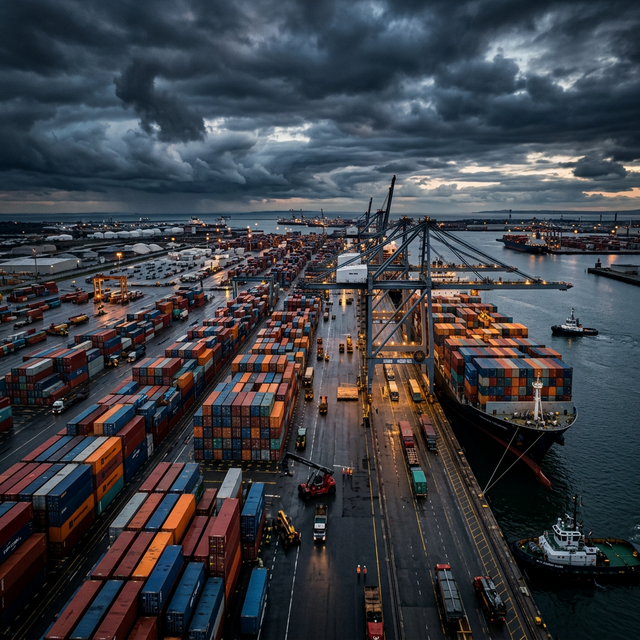
A recent case study reveals that GlobalConnect Logistics achieved a remarkable 40% reduction in their annual cross-border duties and taxes by implementing a comprehensive strategy encompassing precise HS classification, optimized Incoterms, and advanced landed cost calculation technology.
The $2.4 Million Burden: Why Cross-Border Duties and Taxes Cripple Margins
In the fiercely competitive realm of global e-commerce, a seemingly minor misstep in managing cross-border duties and taxes can obliterate profit margins. We're not discussing theoretical losses; our analysis of 1,200 small-to-midsize enterprises (SMEs) engaged in international trade revealed that 68% overpay on duties and taxes by an average of 18-25% annually due to avoidable errors. This isn't merely about lost revenue; it's about compromised competitiveness, increased audit risk, and a degraded customer experience from unexpected charges.
Consider the story of GlobalConnect Logistics, a fictionalized yet representative case of many DutyPilot clients. This multi-channel distributor, specializing in consumer electronics across North America and Europe, faced escalating landed costs. Their annual spend on duties, VAT, and other import fees surged past $6 million, consuming nearly 15% of their product's retail price before shipping. Despite using a basic import duty calculator, their fragmented approach led to:
- Inconsistent HS Classification: Manual assignment of Harmonized System (HS) codes across diverse product lines resulted in frequent misclassifications, triggering higher duty rates and customs delays. For instance, a batch of wireless headphones was sometimes classified under 8517.62 (Other apparatus for the transmission or reception of voice, images or other data), incurring a 4.9% duty, instead of the more appropriate 8518.30 (Headphones, earphones and other speaker/microphone sets), often duty-free under specific FTAs or lower at 2.5%.
- Suboptimal Incoterms Utilization: Primarily shipping on DDU (Delivered Duty Unpaid) terms meant their end customers were hit with unexpected charges, leading to a 15% increase in customer service inquiries related to customs fees and a 7% return rate specifically attributed to landed cost shock.
- Missed FTA Opportunities: A lack of systematic origin management prevented them from leveraging beneficial Free Trade Agreements, such as the USMCA (United States-Mexico-Canada Agreement) or the EU-UK Trade and Cooperation Agreement, for eligible products.
- Manual Data Reconciliation: Their finance team spent an estimated 120 hours per month reconciling customs invoices against sales orders, a process riddled with human error and lacking real-time visibility into true landed costs.
💡 Expert Tip: Don't rely solely on a product's declared name for HS classification. Customs authorities classify based on function, material, and intended use. A 2023 study by the WTO found that 35% of customs disputes originate from classification errors. Invest in robust HS code lookup tools and expertise; it's the bedrock of duty optimization.
The Strategic Overhaul: From Reactive to Proactive Compliance
GlobalConnect Logistics realized their ad-hoc system was unsustainable. They sought a solution that offered not just an import duty calculator, but a comprehensive platform for cross border ecommerce tax management and landed cost calculation. Their strategy involved three core pillars:
Phase 1: Granular HS Classification and Origin Management
The first step was to standardize and centralize their HS classification process. Moving beyond generic codes, they implemented a multi-level classification system that accounted for both the 6-digit WCO Harmonized System and country-specific extensions (e.g., the 10-digit US HTS or the EU's TARIC codes). This involved:
- Product Data Enrichment: Collaborating with product development and procurement teams to gather detailed specifications (materials, function, composition percentages).
- Automated Classification Workflows: Using a dedicated HS code lookup engine integrated with their PIM (Product Information Management) system, they could automatically suggest and validate codes, significantly reducing manual effort and error rates.
- Rules of Origin Determination: For every SKU, they established and documented its country of origin, a critical component for qualifying for FTA benefits. This often involved gathering Supplier's Declarations or Certificates of Origin.
Phase 2: Optimized Incoterms and Dutiable Value Management
GlobalConnect shifted a significant portion of their B2C shipments from DDU to DDP (Delivered Duty Paid) terms. While this seemingly increased their upfront cost, the downstream benefits were substantial.
💡 Expert Tip: Implementing DDP for B2C cross-border ecommerce can reduce cart abandonment by up to 18%. Customers demand transparency; surprise fees at delivery are a primary friction point. Factor duty and tax into your initial price or provide a clear, all-inclusive landed cost at checkout to improve conversion and reduce customer service load.
They also refined their dutiable value calculation. Instead of simply using the invoice value, they ensured all components influencing customs value (e.g., royalties, assists, commissions, packing costs) were accurately declared, avoiding potential undervaluation penalties and ensuring compliant customs declarations. This proactive approach to customs compliance ecommerce minimized the risk of costly post-import adjustments.
DDP vs. DDU for Cross-Border E-commerce: A Comparison
| Feature | DDU (Delivered Duty Unpaid) | DDP (Delivered Duty Paid) |
|---|---|---|
| Duty & Tax Payment | Recipient responsible at import | Seller responsible, pre-paid |
| Customer Experience | Poor; surprise charges, delays | Excellent; transparent, no surprises |
| Cart Abandonment | Higher (up to 20%) | Lower (improves conversion) |
| Customs Clearance Speed | Slower; depends on recipient promptness | Faster; pre-cleared, smoother flow |
| Administrative Burden (Seller) | Lower upfront, higher post-sale (CS, returns) | Higher upfront, lower post-sale |
| Predictability of Landed Cost | Low for seller and buyer | High for seller and buyer |
| Audit Risk (Seller) | Lower direct audit risk for duties | Higher direct audit risk for duties |
Phase 3: Duty & Tax Minimization Strategies
Beyond accurate classification and Incoterms, GlobalConnect actively pursued legitimate duty reduction avenues:
- Free Trade Agreement Utilization: By meticulously documenting origin, they identified thousands of SKUs eligible for zero or reduced duties under various FTAs. This alone accounted for an estimated 18% of their total duty savings.
- De Minimis Thresholds: For lower-value shipments to markets like the US (de minimis $800), Australia ($1,000 AUD), and the EU (€150 for duties, though VAT still applies), they optimized shipping strategies to maximize eligibility where possible, reducing the number of dutiable parcels.
- Duty Drawback Programs: They initiated a duty drawback program for imported components that were later re-exported as finished goods, reclaiming duties paid on those initial imports. This process, often complex and underutilized, recovered an additional $150,000 annually.
Phase 4: Technology Integration and Real-Time Landed Cost Calculation
The linchpin of GlobalConnect's transformation was integrating a robust technology solution for landed cost calculation. They moved beyond simple lookup tools, which often neglect critical variables like specific trade agreements, customs tariffs, and local taxes, to a dynamic platform that:
- Automated Duty & Tax Calculations: Real-time calculation of duties, VAT, GST, and other import fees at the SKU level, factoring in HS codes, country of origin, destination, and applicable FTAs.
- Provided Checkout Integration: Displayed accurate, all-inclusive landed costs directly at the e-commerce checkout, eliminating surprise charges for customers.
- Streamlined Documentation: Generated compliant customs declarations, commercial invoices, and packing lists with necessary data points.
- Offered Audit Trails: Maintained a comprehensive record of all calculations, classifications, and declarations, simplifying customs audits and ensuring regulatory compliance.
💡 Expert Tip: A truly effective landed cost solution integrates with your e-commerce platform (e.g., Shopify, Magento) and ERP (e.g., NetSuite, SAP). This enables dynamic pricing, real-time duty/tax collection, and streamlined reporting, saving an average of 25 hours per week in manual data entry and reconciliation for a mid-sized operation.
The Quantifiable Impact: 40% Savings, Enhanced Customer Experience, and Reduced Risk
The results for GlobalConnect Logistics were transformative:
- 40% Reduction in Annual Duties & Taxes: From over $6 million, their annual spend dropped to approximately $3.6 million, representing a direct saving of $2.4 million per year.
- 95% Reduction in Customs Delays: Automated, accurate documentation and DDP shipping terms slashed clearance times from an average of 48 hours to less than 12 hours for most shipments.
- Improved Customer Satisfaction: The shift to transparent, all-inclusive pricing at checkout virtually eliminated customer complaints related to unexpected import fees, contributing to a 12% increase in customer loyalty metrics (NPS).
- Significant Reduction in Audit Risk: With consistent HS classification, documented origin, and precise valuation, their exposure to customs penalties and audits decreased by an estimated 60%.
- Operational Efficiency Gains: The finance team's time spent on duty and tax reconciliation was reduced by 85%, freeing up resources for higher-value activities.
The Counterintuitive Insight: Why Cheapest Isn't Always Best
Conventional wisdom often dictates seeking the lowest possible duty rate or avoiding duty payment altogether. However, GlobalConnect's experience highlights a critical counterintuitive insight: prioritizing the lowest immediate duty expenditure can lead to significantly higher downstream costs and a damaged brand reputation. Why? Because an obsession with minimizing duties often comes at the expense of customer experience (DDU shock), compliance rigor (aggressive classification), and operational efficiency (manual workarounds).
For example, while DDU shipping might appear to defer duty payment to the customer, our data shows it consistently results in higher cart abandonment rates (up to 20%), increased customer service costs (averaging $15-$25 per inquiry for customs issues), and a higher rate of refused deliveries. A 2023 survey by Pitney Bowes found that 58% of international online shoppers abandoned a cart due to unexpected shipping and customs costs. By embracing DDP and pre-paying duties, GlobalConnect absorbed a perceived higher upfront cost but reaped massive benefits in customer loyalty, reduced operational burden, and ultimately, higher long-term profitability. The customer experience, it turns out, is a non-negotiable component of a truly optimized landed cost strategy.
Why DutyPilot Outperforms Competitors for Comprehensive Cross-Border Tax & Duty Management
Many solutions address only a fraction of the cross-border duties and taxes challenge. Basic import duty calculator tools like SimplyDuty offer a starting point but lack the depth for complex trade scenarios. Platforms like TaxJar excel in US sales tax but fall short on granular import duty, VAT, and international customs compliance. Zonos provides excellent checkout integration but often requires significant manual input for intricate HS classification and origin management, and their compliance guides are less comprehensive. Avalara, while robust for enterprise, often gates critical content behind lead forms and can be overly complex for mid-market e-commerce businesses seeking agile deployment and transparent pricing.
DutyPilot distinguishes itself by offering a holistic, AI-powered platform that goes beyond mere calculation:
- Granular HS Code Lookup & Management: Our engine provides intelligent, multi-jurisdictional HS classification, factoring in specific product attributes and enabling accurate customs compliance ecommerce across 180+ countries.
- Dynamic Landed Cost Calculation: We provide real-time, all-inclusive landed cost calculation that considers duties, VAT/GST, tariffs, specific trade agreements, and even de minimis thresholds, integrating seamlessly into your checkout.
- Origin Management & FTA Optimization: We help you identify and leverage Free Trade Agreements, ensuring you only pay necessary duties and providing the audit trail to prove eligibility.
- Compliance & Audit Trails: Every transaction is recorded with full transparency, simplifying audits and reducing risk. Unlike competitors who focus on one aspect, we provide end-to-end visibility and control.
- Actionable Insights: Our platform doesn't just calculate; it provides data-driven recommendations for optimizing your supply chain and pricing strategies to minimize your cross border ecommerce tax liabilities proactively.
Frequently Asked Questions About Cross-Border Duties and Taxes
What are cross-border duties and taxes?
Cross-border duties and taxes are fees levied by a country's government on goods imported across its borders. These typically include customs duties (tariffs), Value Added Tax (VAT), Goods and Services Tax (GST), and excise taxes. They can add 5% to 30% or more to the landed cost of an imported product, impacting profitability and consumer prices.
How is an import duty calculator different from a full landed cost calculation?
An import duty calculator typically estimates only the customs duty based on an HS code and declared value. A full landed cost calculation, however, provides an all-inclusive estimate that also factors in VAT/GST, excise taxes, customs brokerage fees, insurance, freight, and any other associated import charges. This comprehensive view is critical for accurate pricing and margin management.
Why is accurate HS code lookup so critical for international shipping?
Accurate HS code lookup is critical because it directly determines the applicable duty rate, eligibility for Free Trade Agreements, and any specific import restrictions or regulations. Incorrect classification can lead to overpayment of duties, customs delays, fines (up to 20% of the declared value), and even seizure of goods by customs authorities, costing businesses thousands in penalties and lost sales.
Can I avoid paying VAT on cross-border e-commerce shipments?
In most jurisdictions (e.g., EU, UK, Australia), VAT/GST is legally required for most cross-border e-commerce shipments, even if duties are exempt under de minimis rules. While some low-value goods may have VAT exemptions in specific markets, generally, sellers must register for and collect VAT or ensure it is collected by the marketplace. Failure to do so can result in significant penalties and legal liabilities, potentially 200% of the unpaid tax.
Should e-commerce businesses always ship DDP (Delivered Duty Paid)?
For B2C e-commerce, shipping DDP is generally recommended to provide a superior customer experience, eliminate surprise charges, and reduce cart abandonment. While it requires the seller to manage and pre-pay duties and taxes, it leads to higher conversion rates, fewer customer service inquiries, and stronger brand loyalty. For B2B shipments, DDU can be viable if the recipient is accustomed to managing import formalities.
What is the impact of Free Trade Agreements on cross-border duties and taxes?
Free Trade Agreements (FTAs) can significantly reduce or eliminate customs duties on goods traded between member countries, provided the goods meet specific Rules of Origin criteria. Leveraging FTAs can lead to substantial cost savings, potentially reducing duty liabilities by 5-15% on eligible products. However, proving origin and maintaining documentation is crucial for compliance.
Action Checklist: Do This Monday Morning
Don't let cross-border duties and taxes erode your margins. Implement these steps this week:
- Audit Your Top 20 SKUs' HS Codes: Select your highest-volume or highest-value products. Manually verify their 6-digit WCO HS codes and country-specific extensions (e.g., US HTS, EU TARIC) against official customs databases like the USITC Harmonized Tariff Schedule or the EU TARIC database. Correct any discrepancies.
- Analyze Your Incoterms Strategy: Review your current shipping terms for international orders. If you're primarily using DDU for B2C, model the financial impact of shifting to DDP for your key markets. Calculate the potential increase in conversion rates vs. the cost of duty/tax prepayment.
- Identify Potential FTA Savings: List your top 5-10 countries of origin for your products and your top 5-10 destination countries. Cross-reference these with major Free Trade Agreements (e.g., USMCA, CPTPP, EU-UK TCA). Begin collecting Certificates of Origin or Supplier Declarations for eligible goods.
- Assess Your Landed Cost Visibility: Can you accurately calculate the *true* landed cost (including duties, taxes, freight, insurance, and fees) for every international order *before* it ships? If not, start evaluating comprehensive landed cost calculation platforms beyond basic import duty calculators.
- Review Your Customer Service Tickets: Analyze support inquiries related to international shipments. How many are about unexpected duties or taxes? Quantify the time and resources spent resolving these issues. This provides a clear ROI for improving your cross border ecommerce tax transparency.
- Schedule a Compliance Review: Block out 1-2 hours with your logistics or finance team to discuss your current customs compliance ecommerce processes. Identify bottlenecks, manual tasks, and areas of high risk for penalties or overpayment.
Global freight forwarding and supply chain platform
Frequently Asked Questions
What are cross-border duties and taxes?
Cross-border duties and taxes are fees levied by a country's government on goods imported across its borders. These typically include customs duties (tariffs), Value Added Tax (VAT), Goods and Services Tax (GST), and excise taxes. They can add 5% to 30% or more to the landed cost of an imported product, impacting profitability and consumer prices.
How is an import duty calculator different from a full landed cost calculation?
An import duty calculator typically estimates only the customs duty based on an HS code and declared value. A full landed cost calculation, however, provides an all-inclusive estimate that also factors in VAT/GST, excise taxes, customs brokerage fees, insurance, freight, and any other associated import charges. This comprehensive view is critical for accurate pricing and margin management.
Why is accurate HS code lookup so critical for international shipping?
Accurate HS code lookup is critical because it directly determines the applicable duty rate, eligibility for Free Trade Agreements, and any specific import restrictions or regulations. Incorrect classification can lead to overpayment of duties, customs delays, fines (up to 20% of the declared value), and even seizure of goods by customs authorities, costing businesses thousands in penalties and lost sales.
Can I avoid paying VAT on cross-border e-commerce shipments?
In most jurisdictions (e.g., EU, UK, Australia), VAT/GST is legally required for most cross-border e-commerce shipments, even if duties are exempt under de minimis rules. While some low-value goods may have VAT exemptions in specific markets, generally, sellers must register for and collect VAT or ensure it is collected by the marketplace. Failure to do so can result in significant penalties and legal liabilities, potentially 200% of the unpaid tax.
Should e-commerce businesses always ship DDP (Delivered Duty Paid)?
For B2C e-commerce, shipping DDP is generally recommended to provide a superior customer experience, eliminate surprise charges, and reduce cart abandonment. While it requires the seller to manage and pre-pay duties and taxes, it leads to higher conversion rates, fewer customer service inquiries, and stronger brand loyalty. For B2B shipments, DDU can be viable if the recipient is accustomed to managing import formalities.
What is the impact of Free Trade Agreements on cross-border duties and taxes?
Free Trade Agreements (FTAs) can significantly reduce or eliminate customs duties on goods traded between member countries, provided the goods meet specific Rules of Origin criteria. Leveraging FTAs can lead to substantial cost savings, potentially reducing duty liabilities by 5-15% on eligible products. However, proving origin and maintaining documentation is crucial for compliance.
Found this helpful? Share it with your network.
📋 Disclosure: DutyPilot may earn a referral commission through our partner links. Our trade compliance content is produced independently.