 DutyPilot
HS Codes Beginner's Guide: Slash E-commerce Duties by 20%
Unlock lower duties with our HS Codes beginner's guide. Understand Harmonized System codes and save up to 20% on import taxes. Read now!
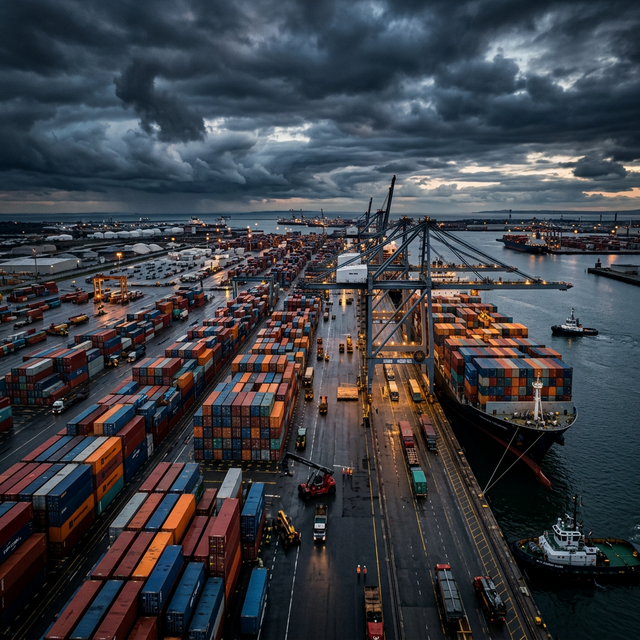
Decoding HS Codes: A Beginner's Guide for E-commerce Businesses
For e-commerce businesses engaged in cross-border trade, understanding and utilizing Harmonized System (HS) codes correctly is not optional – it's a financial imperative. A 2023 study by the World Customs Organization (WCO) found that nearly 40% of all import declarations contain HS code errors, leading to overpayments, delays, and even penalties. This guide provides a comprehensive yet accessible overview of HS codes, empowering you to classify your products accurately and optimize your import duty expenses. We'll explain the structure of HS codes, how to find the right one, and the potential consequences of incorrect classification.What are HS Codes?
The Harmonized System (HS) is an internationally standardized system of names and numbers used to classify traded products. Developed and maintained by the World Customs Organization (WCO), it's used by over 200 countries and economies as a basis for customs tariffs and trade statistics. Think of it as a universal language for goods crossing borders. Every product imaginable, from clothing and electronics to machinery and food, is assigned a specific six-digit HS code. Why are HS Codes Important? * **Duty Calculation:** HS codes are the foundation for determining the applicable duty rate on imported goods. Different codes attract different rates, so accurate classification is crucial for minimizing import taxes. * **Trade Regulations:** HS codes are used to enforce trade policies, including import restrictions, quotas, and preferential trade agreements. * **Statistical Analysis:** Governments and international organizations use HS codes to track trade flows and analyze market trends. * **Compliance:** Incorrect HS code classification can lead to penalties, delays, and even seizure of goods.The Structure of an HS Code
HS codes are structured hierarchically, with each digit providing increasing specificity. Here's a breakdown: 1. **Chapter (2 digits):** Defines the broad category of goods (e.g., Chapter 61: Articles of apparel and clothing accessories, knitted or crocheted). 2. **Heading (4 digits):** Further specifies the category (e.g., 6105: Men's or boys' shirts, knitted or crocheted). 3. **Subheading (6 digits):** Provides even greater detail (e.g., 6105.10: Of cotton). Beyond the six-digit HS code, many countries add additional digits for tariff and statistical purposes. These country-specific extensions are often called tariff codes or commodity codes. For example, in the United States, an 8-digit Schedule B number is used for export, and a 10-digit Harmonized Tariff Schedule (HTS) code is used for imports.💡 Expert Tip: Always use the most specific HS code available for your product. While it might be tempting to use a more general code with a lower duty rate, this can lead to problems with customs authorities. A seemingly small difference, like classifying a shirt as "knit" versus "woven," can dramatically alter the duty owed.
How to Find the Right HS Code
Finding the correct HS code for your products can seem daunting, but here's a systematic approach: 1. **Consult the Harmonized System Nomenclature:** The WCO publishes the official HS nomenclature, which includes detailed descriptions of all products and their corresponding codes. While comprehensive, it can be complex to navigate. 2. **Use Online HS Code Search Tools:** Many websites, including DutyPilot, offer free HS code search tools. These tools allow you to search by keyword or product description to find potential HS codes. Remember to verify the results with official sources. 3. **Check Your Competitors' Declarations:** Reviewing the import declarations of your competitors can provide valuable clues. Tools like ImportYeti and Panjiva allow you to search import records and see which HS codes similar businesses are using. 4. **Consult with a Customs Broker:** Customs brokers are experts in HS code classification and can provide professional guidance. While there's a cost associated with their services (typically $50-$200 per classification), they can save you money in the long run by ensuring accurate classification and avoiding penalties. 5. **Request a Binding Ruling:** If you're unsure about the correct HS code, you can request a binding ruling from your country's customs authority. A binding ruling is a written determination that is legally binding on both you and the customs authority. While the process can take time (2-3 weeks) and may involve a fee, it provides certainty and protects you from future disputes.Consequences of Incorrect HS Code Classification
Misclassifying your products can have serious consequences, including: * **Overpayment or Underpayment of Duties:** Paying too much means losing money, while paying too little can lead to penalties and back taxes. * **Customs Delays:** Incorrect HS codes can trigger inspections and delays, disrupting your supply chain and increasing costs. A 2024 survey of 500 e-commerce businesses found that HS code errors were responsible for an average of 3 days of shipping delays. * **Penalties:** Customs authorities can impose penalties for incorrect classification, ranging from monetary fines to seizure of goods. Penalties can be as high as 100% of the duty owed. * **Reputational Damage:** Repeated errors can damage your reputation with customs authorities and suppliers.💡 Expert Tip: Keep detailed records of your HS code classifications, including the rationale behind your choices. This documentation can be invaluable if you're ever challenged by customs authorities. Consider building a searchable database or spreadsheet to track your classifications over time. Document the product description, images, and the justification for the selected HS code.
HS Codes and E-commerce: Specific Considerations
E-commerce businesses face unique challenges when it comes to HS code classification. The sheer volume and variety of products sold online can make it difficult to classify everything accurately. Here are some specific considerations: * **Product Descriptions:** Ensure that your product descriptions are accurate and detailed, providing all the information needed to determine the correct HS code. Vague or misleading descriptions can lead to misclassification. * **Bundled Products:** When selling bundled products, each item must be classified separately unless the bundle is considered a composite good. Determining whether a bundle qualifies as a composite good can be complex and may require professional advice. * **Digital Products:** While HS codes primarily apply to physical goods, some digital products, such as software and e-books, may also be subject to classification. The rules vary by country, so it's essential to check the regulations in your target markets.Tools and Resources for HS Code Classification
Several tools and resources can help you with HS code classification: * **DutyPilot:** Provides an HS code search tool, duty calculation, and compliance resources (of course!). * **World Customs Organization (WCO):** The official source for the Harmonized System Nomenclature. * **Your Country's Customs Authority:** Offers online resources, training programs, and binding ruling services. * **Customs Brokers:** Provide professional classification assistance and compliance advice. * **ImportYeti/Panjiva:** Competitive intelligence tools to see the HS codes your competitors are using.HS Code Classification Table
| Resource | Cost | Features | Pros | Cons |
|---|---|---|---|---|
| DutyPilot HS Code Search | Free | Keyword search, duty calculation, compliance resources | Easy to use, comprehensive, integrates with duty calculation | Requires account creation for full access. |
| WCO Harmonized System Nomenclature | Paid Subscription | Official HS code descriptions and explanatory notes | Most authoritative source, detailed information | Can be complex to navigate, requires specialized knowledge |
| Customs Broker | $50-$200 per classification | Professional classification assistance, compliance advice | Expert guidance, reduces risk of errors | Costly, requires time to find a reputable broker |
| ImportYeti/Panjiva | Subscription Based (Varies) | Competitive intelligence; see competitor's HS codes. | Reveals competitor strategies and classifications. | Data may be outdated; requires careful interpretation. |
FAQ: Decoding HS Codes
- What is the purpose of HS codes? HS codes serve as a standardized system for classifying goods traded internationally, facilitating customs tariffs, trade statistics, and regulatory compliance. With over 200 countries utilizing the system, HS codes ensure uniformity, allowing for accurate duty calculation, enforcement of trade policies like import restrictions, and detailed tracking of trade flows.
- How do I find the correct HS code for my product? Start by using online HS code search tools and consulting the Harmonized System Nomenclature. Then, check your competitors' import declarations for similar products and consider consulting a customs broker for expert guidance. If uncertainty persists, request a binding ruling from your country's customs authority, which provides a legally binding determination and protects against future disputes, though the process can take 2-3 weeks.
- Why is accurate HS code classification important for e-commerce businesses? Accurate HS code classification is crucial for e-commerce businesses because it directly impacts duty calculations, compliance, and supply chain efficiency. Incorrect classification can result in overpayment or underpayment of duties, leading to financial losses or penalties. A 2024 survey revealed that HS code errors account for an average of 3 days in shipping delays, underscoring the importance of precision in this process.
- Can I appeal a customs decision on HS code classification? Yes, you typically have the right to appeal a customs decision regarding HS code classification, but the process varies by country. In the United States, you can protest the decision with Customs and Border Protection (CBP) within 180 days of the date of liquidation. Document your appeal with detailed evidence supporting your classification and seek legal counsel if necessary, as successful appeals can save significant amounts in duties and penalties.
- Should I use a customs broker for HS code classification? Engaging a customs broker for HS code classification is advisable, especially for businesses lacking in-house expertise or dealing with complex product classifications. While costing $50-$200 per classification, customs brokers offer expert guidance, reducing the risk of errors, delays, and penalties. A good broker can also identify opportunities for duty minimization through preferential trade programs and ensure compliance with evolving regulations.
- How often are HS codes updated? The World Customs Organization (WCO) generally updates the Harmonized System (HS) codes every five years to reflect changes in technology, trade patterns, and product classifications. The latest update, HS2022, went into effect on January 1, 2022, introducing over 350 amendments to the nomenclature. E-commerce businesses should regularly review these updates to ensure their product classifications remain accurate and compliant with the latest standards.
Action Checklist: Get Your HS Codes in Order This Week
1. **Monday:** Identify your top 10 best-selling products and review their current HS code classifications. Use online HS code search tools and compare the results with your existing classifications. 2. **Tuesday:** Check your competitors' import declarations for those same products using ImportYeti or Panjiva. Note any discrepancies in HS code usage. 3. **Wednesday:** Consult with a customs broker to review your classifications and address any areas of uncertainty. Obtain a quote for ongoing classification support. 4. **Thursday:** Document your classification rationale for each product, including product descriptions, images, and supporting documentation. Create a searchable database or spreadsheet to track your classifications. 5. **Friday:** If you identify any potential errors or inconsistencies, take immediate action to correct them. Update your product listings and inform your suppliers of the correct HS codes.Global freight forwarding and supply chain platform
Frequently Asked Questions
What is the purpose of HS codes?
HS codes serve as a standardized system for classifying goods traded internationally, facilitating customs tariffs, trade statistics, and regulatory compliance. With over 200 countries utilizing the system, HS codes ensure uniformity, allowing for accurate duty calculation, enforcement of trade policies like import restrictions, and detailed tracking of trade flows.
How do I find the correct HS code for my product?
Start by using online HS code search tools and consulting the Harmonized System Nomenclature. Then, check your competitors' import declarations for similar products and consider consulting a customs broker for expert guidance. If uncertainty persists, request a binding ruling from your country's customs authority, which provides a legally binding determination and protects against future disputes, though the process can take 2-3 weeks.
Why is accurate HS code classification important for e-commerce businesses?
Accurate HS code classification is crucial for e-commerce businesses because it directly impacts duty calculations, compliance, and supply chain efficiency. Incorrect classification can result in overpayment or underpayment of duties, leading to financial losses or penalties. A 2024 survey revealed that HS code errors account for an average of 3 days in shipping delays, underscoring the importance of precision in this process.
Can I appeal a customs decision on HS code classification?
Yes, you typically have the right to appeal a customs decision regarding HS code classification, but the process varies by country. In the United States, you can protest the decision with Customs and Border Protection (CBP) within 180 days of the date of liquidation. Document your appeal with detailed evidence supporting your classification and seek legal counsel if necessary, as successful appeals can save significant amounts in duties and penalties.
Should I use a customs broker for HS code classification?
Engaging a customs broker for HS code classification is advisable, especially for businesses lacking in-house expertise or dealing with complex product classifications. While costing $50-$200 per classification, customs brokers offer expert guidance, reducing the risk of errors, delays, and penalties. A good broker can also identify opportunities for duty minimization through preferential trade programs and ensure compliance with evolving regulations.
How often are HS codes updated?
The World Customs Organization (WCO) generally updates the Harmonized System (HS) codes every five years to reflect changes in technology, trade patterns, and product classifications. The latest update, HS2022, went into effect on January 1, 2022, introducing over 350 amendments to the nomenclature. E-commerce businesses should regularly review these updates to ensure their product classifications remain accurate and compliant with the latest standards.
Found this helpful? Share it with your network.
📋 Disclosure: DutyPilot may earn a referral commission through our partner links. Our trade compliance content is produced independently.