 DutyPilot
Incoterms Decoded: Slash E-Commerce Tax & Duties by 20%
Master Incoterms for cross-border e-commerce! Reduce tax & duty costs by up to 20% and streamline operations. Get our actionable checklist now!
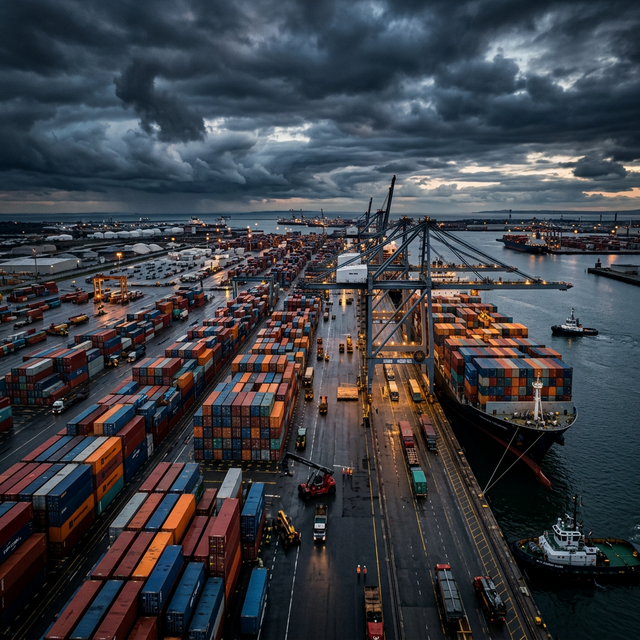
Incoterms dictate responsibility and liability between buyers and sellers in international trade, significantly impacting cross-border e-commerce tax and duties.
Decoding Incoterms: A Guide to Cross-Border E-Commerce Tax and Duties
For e-commerce businesses venturing into the global marketplace, understanding Incoterms is not just helpful—it's essential. These internationally recognized trade terms, published by the International Chamber of Commerce (ICC), define the responsibilities of sellers and buyers in international transactions, including who bears the costs of freight, insurance, and import duties. Choosing the right Incoterm can dramatically affect your bottom line and customer experience. We've seen cases where a simple Incoterm adjustment saves businesses thousands of dollars annually.
Incoterms 2020 is the latest version, and it's crucial to use it correctly. Using outdated Incoterms, or misunderstanding their implications, can lead to unexpected costs, delays, and even legal disputes.
Why Incoterms Matter for E-Commerce Tax and Duties
The primary reason Incoterms are critical in cross-border e-commerce is their direct impact on landed cost. Landed cost includes the original price of the product plus all associated costs to get it to the buyer's door, including:
- Shipping costs
- Insurance
- Import duties
- Taxes (VAT, GST, etc.)
- Customs clearance fees
- Storage and handling
Incoterms dictate which party is responsible for each of these elements. For example, if you use Delivered Duty Paid (DDP), you, as the seller, are responsible for all costs until the goods reach the buyer's location, including import duties and taxes. Conversely, with Ex Works (EXW), the buyer is responsible for nearly all costs and risks from the moment the goods leave your warehouse.
Incorrect Incoterm selection can lead to several problems:
- Unexpected Costs: Buyers may face surprise duty and tax bills upon delivery, leading to abandoned carts and negative reviews.
- Cash Flow Issues: Paying duties upfront (as with DDP) can strain your cash flow, especially for startups.
- Compliance Risks: Misunderstanding Incoterms can result in non-compliance with customs regulations, leading to penalties and delays.
- Competitive Disadvantage: Higher landed costs can make your products less attractive compared to competitors.
💡 Expert Tip: Always include the Incoterms 2020 version in your commercial invoice and other shipping documents to avoid ambiguity and potential disputes. Omitting the year can lead to confusion and application of older, potentially outdated, rules.
Key Incoterms for Cross-Border E-Commerce
While there are 11 Incoterms in total, a few are particularly relevant for cross-border e-commerce businesses:
- EXW (Ex Works): Buyer assumes all responsibility from the seller's location. Rarely used in e-commerce due to complexity for the buyer.
- FOB (Free on Board): Seller is responsible for delivering goods to the port of shipment. Buyer assumes responsibility from that point onward. Common for bulk shipments, less so for individual e-commerce orders.
- CIF (Cost, Insurance, and Freight): Seller pays for the cost of goods, insurance, and freight to the destination port. Buyer is responsible for import duties and taxes.
- DAP (Delivered at Place): Seller is responsible for delivering goods to a specified location. Buyer is responsible for import duties and taxes. Offers a balance of responsibility.
- DDP (Delivered Duty Paid): Seller is responsible for delivering goods to the buyer's location, including import duties and taxes. Simplifies the process for the buyer and enhances customer satisfaction.
Let's examine DAP and DDP in more detail, as they are frequently used in cross-border e-commerce.
DAP (Delivered at Place)
With DAP, the seller arranges and pays for transportation to a specified destination. However, the buyer is responsible for import duties, taxes, and customs clearance. This option can be attractive if you want to control shipping costs but don't want to handle the complexities of import regulations in the destination country.
Pros:
- Seller controls shipping.
- Lower upfront costs for the seller.
Cons:
- Buyer faces potential surprise costs.
- Risk of shipment delays if the buyer is unprepared for customs clearance.
DDP (Delivered Duty Paid)
DDP places the maximum responsibility on the seller. You are responsible for all costs and risks associated with delivering the goods to the buyer's location, including import duties, taxes, and customs clearance. While it can be more complex for the seller, it provides a seamless experience for the buyer.
Many e-commerce businesses are shifting to DDP to improve customer satisfaction and reduce cart abandonment rates. A 2023 survey by Baymard Institute found that unexpected shipping costs, including duties and taxes, are the number one reason for cart abandonment, cited by 49% of respondents.
Pros:
- Enhanced customer experience.
- Reduced cart abandonment.
- Increased sales potential.
Cons:
- Higher upfront costs for the seller.
- Requires expertise in international customs regulations.
- Potential for errors in duty and tax calculations if not managed carefully.
Incoterms: DAP vs DDP
| Feature | DAP (Delivered at Place) | DDP (Delivered Duty Paid) |
|---|---|---|
| Responsibility for Import Duties & Taxes | Buyer | Seller |
| Customs Clearance Responsibility | Buyer | Seller |
| Upfront Costs for Seller | Lower | Higher |
| Customer Experience | Potentially Negative (Surprise Costs) | Positive (Seamless) |
| Complexity for Seller | Moderate | High |
| Best Suited For | Businesses wanting to control shipping costs but avoid customs complexities. | Businesses prioritizing customer experience and willing to manage customs. |
How to Choose the Right Incoterm
Selecting the appropriate Incoterm depends on several factors, including:
- Your Business Model: Are you selling directly to consumers (B2C) or to other businesses (B2B)?
- Your Target Market: What are the import regulations in your target countries?
- Your Risk Tolerance: How much risk are you willing to assume?
- Your Customer Expectations: What level of service do your customers expect?
A B2C e-commerce business selling high-value items to consumers in Europe, for example, might prefer DDP to provide a premium, hassle-free experience. Conversely, a B2B business selling lower-value goods to businesses in North America might opt for DAP to minimize upfront costs.
💡 Expert Tip: Calculate the landed cost for different Incoterms to understand the true financial impact on your business. Use tools like DutyCalculator or SimplyDuty to estimate duties and taxes accurately. Ignoring this step can lead to pricing errors and lost profits.
Mitigating Risks and Optimizing Costs
Regardless of the Incoterm you choose, there are several strategies you can use to mitigate risks and optimize costs:
- Accurate Product Classification: Ensure your products are correctly classified with the appropriate Harmonized System (HS) code. Incorrect classification can lead to incorrect duty rates and penalties.
- Proper Valuation: Declare the accurate value of your goods on the commercial invoice. Underreporting value is a common mistake that can result in fines and seizure of goods.
- Compliance with Regulations: Stay up-to-date with the latest import regulations in your target countries. Regulations can change frequently, and non-compliance can be costly.
- Duty Drawback Programs: Explore duty drawback programs, which allow you to recover duties paid on imported goods that are subsequently exported. In the US, for example, the Duty Drawback program can refund up to 99% of duties paid.
We've seen companies save substantial amounts by carefully managing these factors. For example, one client, a clothing retailer, saved $18,000 in duties in a single year by correctly classifying their garments using specific HS codes.
FAQ: Incoterms and Cross-Border E-Commerce
- What are Incoterms and why are they important for cross-border e-commerce?
- Incoterms are internationally recognized trade terms defining the responsibilities of buyers and sellers in international transactions, including costs and risks associated with shipping, insurance, and import duties. They are crucial for cross-border e-commerce because they directly impact landed costs, compliance, and customer satisfaction; choosing the wrong Incoterm can increase costs by 10-20%.
- How does DDP (Delivered Duty Paid) benefit e-commerce businesses?
- DDP simplifies the purchasing process for the buyer by making the seller responsible for all costs and risks until the goods reach the buyer's location, including import duties and taxes. This enhanced customer experience can lead to increased sales, reduced cart abandonment rates, and improved customer loyalty; studies show that offering DDP can reduce cart abandonment by up to 15%.
- Why should e-commerce businesses avoid using EXW (Ex Works) Incoterms?
- EXW places almost all responsibility on the buyer, including arranging for transportation, insurance, and customs clearance from the seller's location, which can be complex and off-putting for e-commerce customers. This can lead to a negative customer experience, increased shipping costs for the buyer, and potential delays, making it an unsuitable choice for most e-commerce transactions.
- What is the difference between DAP and DDP Incoterms in terms of tax responsibility?
- Under DAP (Delivered at Place), the seller is responsible for delivering the goods to a specified location, but the buyer is responsible for import duties, taxes, and customs clearance. In contrast, with DDP (Delivered Duty Paid), the seller assumes responsibility for all these costs, providing a more seamless experience for the buyer and potentially increasing sales conversion rates.
- How can I accurately calculate the landed cost for different Incoterms?
- To accurately calculate landed costs, factor in the original product price, shipping costs, insurance, import duties, taxes (VAT, GST), customs clearance fees, and any other associated expenses. Utilize online tools like DutyCalculator or SimplyDuty, which estimate duties and taxes based on product classification (HS code) and destination country, or consult with a customs broker for precise calculations.
- Should I always use DDP Incoterms for cross-border e-commerce?
- While DDP can improve customer satisfaction, it may not always be the best choice due to higher upfront costs and increased complexity for the seller. Consider your business model, target market, risk tolerance, and customer expectations; for example, if you're selling low-value items, DAP might be more cost-effective, but for high-value items, DDP can justify the increased investment by reducing cart abandonment.
Action Checklist: Incoterms for Cross-Border E-Commerce
Follow these steps to optimize your use of Incoterms this week:
- Monday: Review your current Incoterm usage. Analyze your past three months of international sales data. Identify the most commonly used Incoterms and the countries to which you are shipping.
- Tuesday: Calculate landed costs for your top three products using both DAP and DDP Incoterms. Use a tool like DutyCalculator to estimate duties and taxes.
- Wednesday: Evaluate your customer feedback. Check reviews and customer service inquiries for complaints related to unexpected duties or taxes.
- Thursday: Consult with a customs broker. Discuss your current Incoterm strategy and identify potential areas for improvement.
- Friday: Implement a pilot program. Offer DDP shipping to a small subset of customers in a key market and track the impact on sales and customer satisfaction.
By taking these steps, you can proactively manage your Incoterms and unlock significant cost savings and customer satisfaction improvements. Don't let Incoterms be an afterthought—make them a strategic priority.
Global freight forwarding and supply chain platform
Frequently Asked Questions
What are Incoterms and why are they important for cross-border e-commerce?
Incoterms are internationally recognized trade terms defining the responsibilities of buyers and sellers in international transactions, including costs and risks associated with shipping, insurance, and import duties. They are crucial for cross-border e-commerce because they directly impact landed costs, compliance, and customer satisfaction; choosing the wrong Incoterm can increase costs by 10-20%.
How does DDP (Delivered Duty Paid) benefit e-commerce businesses?
DDP simplifies the purchasing process for the buyer by making the seller responsible for all costs and risks until the goods reach the buyer's location, including import duties and taxes. This enhanced customer experience can lead to increased sales, reduced cart abandonment rates, and improved customer loyalty; studies show that offering DDP can reduce cart abandonment by up to 15%.
Why should e-commerce businesses avoid using EXW (Ex Works) Incoterms?
EXW places almost all responsibility on the buyer, including arranging for transportation, insurance, and customs clearance from the seller's location, which can be complex and off-putting for e-commerce customers. This can lead to a negative customer experience, increased shipping costs for the buyer, and potential delays, making it an unsuitable choice for most e-commerce transactions.
What is the difference between DAP and DDP Incoterms in terms of tax responsibility?
Under DAP (Delivered at Place), the seller is responsible for delivering the goods to a specified location, but the buyer is responsible for import duties, taxes, and customs clearance. In contrast, with DDP (Delivered Duty Paid), the seller assumes responsibility for all these costs, providing a more seamless experience for the buyer and potentially increasing sales conversion rates.
How can I accurately calculate the landed cost for different Incoterms?
To accurately calculate landed costs, factor in the original product price, shipping costs, insurance, import duties, taxes (VAT, GST), customs clearance fees, and any other associated expenses. Utilize online tools like DutyCalculator or SimplyDuty, which estimate duties and taxes based on product classification (HS code) and destination country, or consult with a customs broker for precise calculations.
Should I always use DDP Incoterms for cross-border e-commerce?
While DDP can improve customer satisfaction, it may not always be the best choice due to higher upfront costs and increased complexity for the seller. Consider your business model, target market, risk tolerance, and customer expectations; for example, if you're selling low-value items, DAP might be more cost-effective, but for high-value items, DDP can justify the increased investment by reducing cart abandonment.
Found this helpful? Share it with your network.
📋 Disclosure: DutyPilot may earn a referral commission through our partner links. Our trade compliance content is produced independently.