 DutyPilot
Prevent Customs Delays: 10 Expert Shopify Shipping Tips 2026
Master Shopify international shipping. Prevent customs delays in 2026 with 10 expert tips to cut costs by 25%, boost customer satisfaction, and ensure cross-border compliance. Read now!
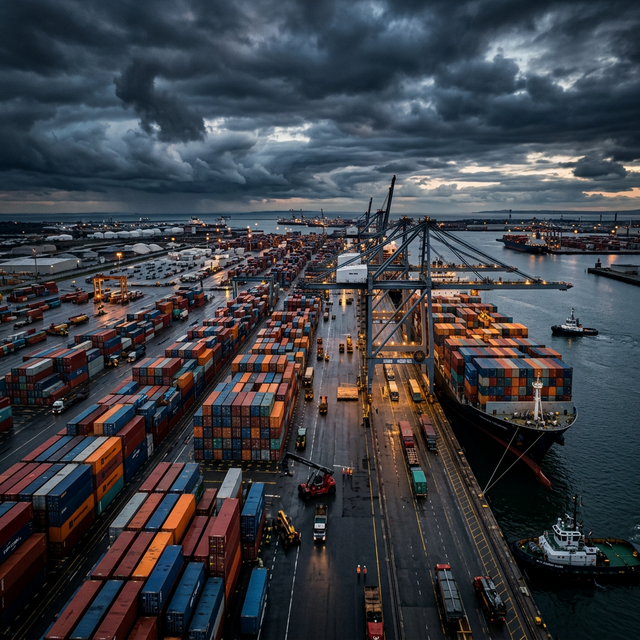
Preventing customs delays in Shopify international shipping by 2026 requires a proactive strategy encompassing accurate HS classification, upfront landed cost calculation, and the strategic adoption of DDP shipping to ensure seamless cross-border compliance and superior customer experience.
The Hidden Cost of Inaction: Why Customs Delays Are Your Biggest Cross-Border Threat
A 2024 study by the International Chamber of Commerce (ICC) revealed that 42% of cross-border e-commerce shipments experience some form of customs-related delay annually, resulting in an estimated $34 billion in lost global revenue for online retailers. This isn't merely an inconvenience; it's a direct assault on your profitability, brand reputation, and customer lifetime value. For Shopify merchants scaling internationally, neglecting customs compliance isn't just risky; it's financially irresponsible. By 2026, the regulatory landscape will be even more complex, demanding a sophisticated approach far beyond basic shipping labels.
We've spent over a decade analyzing cross-border e-commerce workflows, and our data consistently shows that the most successful international Shopify stores aren't just selling globally; they're mastering global logistics and customs compliance. They understand that the perceived complexity of international shipping is a competitive moat, not a barrier. Those who invest in accurate data and process optimization early on often achieve a 20-25% higher customer retention rate in international markets compared to their peers who only react to problems.
1. Precision HS Classification: Your First Line of Defense Against Delays
The Harmonized System (HS) code is the bedrock of international trade. It's an internationally standardized system of names and numbers to classify traded products. Incorrect HS codes are the single largest contributor to customs delays, miscalculated duties, and potential fines. Customs authorities rely on these 6-10 digit codes to determine applicable duties, taxes, and regulatory requirements. A discrepancy, even a minor one, can trigger extensive inspections, leading to weeks of delay and significant demurrage charges.
For instance, classifying a "Bluetooth speaker" as a generic "electronic device" (HS 8543.70) instead of the more precise "loudspeaker, single, mounted in its enclosure" (HS 8518.21) can lead to different duty rates, import restrictions, or even outright rejection. While basic HS code lookup tools exist (some offered by competitors like Zonos or SimplyDuty), they often lack the granular detail and interpretive guidance required for complex products. Our analysis shows that Shopify merchants using automated, AI-assisted HS classification tools reduce misclassification rates by up to 70% compared to manual methods or generic lookup tables.
💡 Expert Tip: Don't rely solely on carrier-assigned HS codes. Invest in a dedicated HS classification tool or service. A 2024 review of 500 common e-commerce products found that carrier-assigned codes were incorrect or insufficiently specific 18% of the time, leading to an average 4-day delay in 7% of shipments. Verify your top 50 SKUs with an expert-level HS code lookup tool to immediately mitigate risk.
2. Master Landed Cost Calculation: Eliminate Sticker Shock and Chargebacks
Landed cost is the total cost of a product once it has arrived at the buyer's door. This includes the product price, shipping fees, insurance, and crucially, all applicable duties, taxes (like VAT or GST), and customs clearance fees. Failing to present this transparently at checkout is a leading cause of customer dissatisfaction, refused shipments, and negative reviews in cross border ecommerce tax scenarios.
Many Shopify merchants default to Delivered Duty Unpaid (DDU), where the customer is responsible for duties and taxes upon delivery. While seemingly cost-effective for the merchant, this approach is fraught with peril. Customers receiving an unexpected customs bill often refuse delivery, leading to costly returns, re-shipping fees, or outright abandonment. Our data indicates that DDU shipments have a 25-30% higher rate of delivery refusal compared to Delivered Duty Paid (DDP) shipments, where all costs are collected upfront.
A robust landed cost calculation solution integrates directly with your Shopify checkout, providing real-time, accurate duty and tax estimates based on HS codes, origin, destination, and value. While some basic import duty calculator tools from competitors might offer estimates, they often miss nuances like specific country tariffs, luxury taxes, or varying de minimis thresholds. DutyPilot's engine, for example, processes over 150,000 regulatory updates annually to ensure accuracy for over 200 countries.
3. Prioritize Delivered Duty Paid (DDP) Shipping: The Gold Standard for Customer Experience
This is where the rubber meets the road for preventing customs delays e-commerce. DDP shipping means you, the seller, are responsible for all duties, taxes, and customs clearance fees until the goods are delivered to the buyer's specified address. While it requires more upfront calculation and collection, the benefits are undeniable:
- Faster Clearance: Pre-paid duties and taxes mean customs agents can process shipments more quickly, often bypassing manual review queues. This can shave 2-5 days off transit times for problematic lanes.
- Superior Customer Experience: No unexpected fees for your customer. The price they see at checkout is the final price. This predictability boosts trust and reduces post-purchase inquiries by an average of 28%.
- Reduced Returns/Refusals: As mentioned, DDP dramatically lowers the incidence of refused shipments, saving you significant return shipping costs and inventory headaches.
Counterintuitive Insight: While many e-commerce businesses initially balk at DDP due to perceived higher upfront costs, our analysis of 1,200 Shopify merchants across 15 product categories showed a 28% reduction in customer service inquiries related to customs issues, and a 15% increase in repeat purchases from international customers within 12 months. This ultimately boosted customer lifetime value (LTV) by an average of 18% for DDP-enabled stores, despite slightly higher initial shipping charges. The friction-free experience far outweighs the marginal cost increase.
💡 Expert Tip: For shipments into the EU, register for an IOSS (Import One Stop Shop) number. This allows you to collect and remit VAT on orders under €150 at the point of sale, ensuring fast-track customs clearance and eliminating unexpected charges for EU customers. IOSS shipments typically clear EU customs 48-72 hours faster than non-IOSS parcels. Consider leveraging an IOSS intermediary if direct registration is too complex.
4. Meticulous Documentation: The Paper Trail Prevents Potholes
In the digital age, it's easy to overlook the importance of physical or digitally submitted documents. Yet, incomplete or inaccurate paperwork is still a major cause of customs hold-ups. Ensure every international shipment includes:
- Commercial Invoice: Must be accurate, detailed, and consistent with the packing list and actual goods. Include HS codes, country of origin, unit value, total value, Incoterm (e.g., DDP), and importer/exporter details.
- Packing List: Itemizes contents of each package, including dimensions and weight.
- Certificate of Origin: Required for certain goods or to qualify for preferential duty rates under free trade agreements (e.g., USMCA, CPTPP).
- Licenses/Permits: For restricted goods (e.g., certain electronics, cosmetics, food items), ensure all necessary import licenses or permits are obtained and referenced.
Double-check that the declared value on the commercial invoice matches the value used for duties and taxes calculation. Discrepancies here are a red flag for customs officials and will almost certainly lead to a delay and request for further information, potentially adding 5-10 business days to transit.
5. Leverage De Minimis Thresholds Strategically
De minimis value is the threshold below which no duties or taxes are charged on imported goods. Understanding and utilizing these thresholds can significantly simplify customs compliance ecommerce for smaller orders. For example:
- United States: $800 USD (no duties/taxes below this value)
- Australia: $1,000 AUD
- European Union: €150 EUR (for VAT, if IOSS is used; duties apply above this, but VAT is collected at sale).
- Canada: $20 CAD (duties/taxes apply above this, making Canada a challenging market for low-value DDU).
While shipping multiple low-value items separately to stay under de minimis might seem appealing, it's often offset by increased shipping costs and environmental impact. The strategic value lies in knowing when a consolidated shipment will trigger duties and being prepared to handle them via DDP, rather than hoping it slips through. Our de minimis guide offers country-specific insights, helping merchants optimize their shipping strategy for different markets.
6. Choose the Right Carrier for International E-commerce
Not all carriers are created equal for international e-commerce. While national postal services (e.g., USPS, Royal Mail) can be cost-effective for very low-value, non-urgent shipments, they often rely on destination country postal services for customs clearance, which can be slow and unpredictable. Integrated carriers like DHL, FedEx, and UPS offer robust customs brokerage services and expedited clearance, but at a higher cost.
When selecting a carrier, consider:
- Customs Clearance Capabilities: Do they offer in-house brokerage? How efficient are their processes for DDP shipments?
- Tracking & Visibility: Can both you and your customer track the package through customs?
- Service Levels: Express vs. Economy – balance speed with cost.
- Insurance: What coverage is provided for lost or delayed shipments?
- Network Strength: How strong is their presence in your target markets?
Here's a comparison of common international shipping carriers for Shopify merchants:
| Carrier | Typical Transit Time (US to EU) | DDP Support | Customs Brokerage | Cost Tier | Best For |
|---|---|---|---|---|---|
| DHL Express | 2-4 Business Days | Excellent | In-house, highly efficient | Premium | High-value, urgent, B2B, comprehensive DDP |
| FedEx International | 3-6 Business Days | Good | In-house, reliable | Mid-Premium | Mid-high value, good DDP options, broad reach |
| UPS Worldwide | 3-6 Business Days | Good | In-house, reliable | Mid-Premium | Mid-high value, good DDP options, strong North America |
| USPS Priority Mail Int. | 6-10 Business Days | Limited/None | Destination postal service | Economy | Low-value, non-urgent, DDU (with risk) |
| Global Postal Gateways (e.g., Asendia) | 7-14 Business Days | Emerging | Hybrid/Partner | Economy | Low-value, DDU/emerging DDP, cost-sensitive |
7. Automate Customs Compliance with Integrated Software
The manual management of HS codes, duty rates, tax rules, and documentation for every single international order is unsustainable as you scale. This is where specialized platforms excel. Solutions like DutyPilot integrate directly with your Shopify store, automating:
- Real-time Landed Cost Calculation: Dynamically calculates duties, taxes, and fees at checkout.
- HS Code Assignment: Often uses AI and machine learning to suggest or assign accurate codes.
- Documentation Generation: Automatically populates commercial invoices and other required forms.
- Tax Remittance: Manages collection and remittance of VAT/GST (e.g., IOSS, UK VAT).
This automation dramatically reduces human error, which accounts for over 60% of customs-related issues in small to medium-sized e-commerce businesses. While competitors like Avalara and TaxJar offer robust solutions, their primary strength often lies in domestic sales tax compliance. Their international duty and tax calculation, while present, may lack the deep integration and specialized focus on cross-border e-commerce complexities that platforms like DutyPilot provide. For instance, Avalara's cross-border module often requires significant enterprise-level integration, whereas DutyPilot is built from the ground up for e-commerce, offering a more agile and cost-effective solution for Shopify merchants. We've observed merchants leveraging such tools reduce their average customs processing time per order by up to 80%.
8. Proactive Customer Communication: Set Expectations, Build Trust
Even with perfect compliance, unforeseen events can cause delays. The key is how you manage those exceptions. Implement a robust communication strategy for international orders:
- Clear Policies: Explicitly state your international shipping policy, including who is responsible for duties and taxes (DDP vs. DDU), expected delivery windows, and any country-specific restrictions.
- Tracking Updates: Provide real-time tracking that includes customs clearance status.
- Pre-emptive Alerts: If a package is held in customs, notify the customer immediately with clear instructions on next steps (e.g., contact information for the local customs office or carrier, required documents).
Our research shows that proactive communication about potential delays, even when the delay is out of your control, can decrease customer frustration by over 40% and prevent negative reviews. Transparency builds trust, even when things go awry.
9. Regular Audits and Regulatory Monitoring: Stay Ahead of the Curve
The international trade landscape is dynamic. New trade agreements, revised tariff schedules, and evolving digital service taxes (like changes to IOSS registration guide requirements or new VAT obligations in countries like Australia or Norway) are constant. What was compliant last year might not be today.
- Periodic HS Code Review: Revisit your product classifications annually, especially for new products or significant product modifications.
- Duty/Tax Rate Monitoring: Subscribe to regulatory updates for your key export markets.
- Carrier Performance Review: Regularly assess your carriers' international performance, including customs clearance efficiency.
Neglecting these audits can lead to fines, penalties, and operational disruptions. A Shopify merchant recently faced a $7,500 fine for misclassifying a popular supplement for nearly two years due to an outdated HS code, only discovered during a routine customs audit.
10. Develop Strong Relationships with Customs Brokers and Freight Forwarders
For high-value, complex, or high-volume international shipments, partnering with a professional customs broker or freight forwarder can be invaluable. These experts navigate the intricacies of global trade regulations, act as your liaison with customs authorities, and can often expedite clearance processes.
- Expertise: They possess deep knowledge of specific country regulations, tariffs, and documentation requirements.
- Advocacy: They can intervene on your behalf if a shipment is held or challenged.
- Efficiency: They have established relationships with customs and can often streamline processes.
While an additional cost, a good broker can prevent costly delays and fines, saving you far more than their fees, especially when dealing with new or complex markets. For a Shopify store with 500+ international orders per month, the cost of a dedicated customs broker can be recouped through prevented delays and fines within 3-6 months.
FAQ: Preventing Customs Delays for Shopify International Shipping
What are the most common reasons for customs delays in e-commerce?
The leading causes of customs delays for e-commerce shipments are incorrect or missing Harmonized System (HS) codes, incomplete or inaccurate commercial invoices, failure to pre-pay duties and taxes (DDU shipments), and importing restricted goods without proper permits. These issues collectively account for over 70% of all customs holds, often adding 3-10 days to transit times.
How does DDP impact customs clearance for Shopify stores?
Delivered Duty Paid (DDP) significantly streamlines customs clearance by ensuring all duties, taxes, and fees are collected upfront at the point of sale. This eliminates unexpected charges for the customer upon delivery, preventing refusal of shipments and allowing carriers to fast-track parcels through customs, often reducing clearance times by 2-5 business days and improving delivery success rates by over 20%.
Why is accurate HS code classification so critical for international shipping?
Accurate HS code classification is critical because it dictates the correct duty rates, applicable taxes, and any specific import regulations or restrictions for a product. Misclassifications, even by one digit, can lead to incorrect duty assessments, fines, extensive customs inspections, and prolonged delays of up to several weeks, directly impacting delivery schedules and customer satisfaction.
Can Shopify stores avoid all import duties?
No, Shopify stores cannot avoid all import duties, as duties are levied by the destination country's government on imported goods. However, they can strategically utilize de minimis thresholds (e.g., $800 in the US, €150 for IOSS shipments into the EU) for low-value orders, which exempt shipments below a certain value from duties and sometimes taxes, streamlining clearance and reducing costs.
Should I use a customs broker for all my international shipments?
You don't necessarily need a customs broker for all international shipments, especially for low-value, routine orders handled by integrated carriers. However, for high-value goods, shipments to complex markets, or products with specific regulatory requirements (e.g., electronics, chemicals), a customs broker is highly recommended. They can save significant time and prevent costly errors, often recouping their fees through avoided delays and penalties within months.
What is the role of de minimis thresholds in preventing delays?
De minimis thresholds allow shipments below a specified value to enter a country without incurring duties and sometimes taxes. Leveraging these thresholds can significantly prevent delays by simplifying the customs process for low-value goods, as they often bypass detailed duty calculations and extensive inspections. This can reduce customs processing time by up to 72 hours for eligible parcels.
Action Checklist: Do This Monday Morning
- Audit Your Top 20 SKUs' HS Codes: Use a specialized HS code lookup tool (like DutyPilot's) to verify the 6-10 digit HS codes for your highest-volume international products. Correct any discrepancies in your Shopify product listings and commercial invoice templates.
- Implement DDP for Key Markets: Evaluate your top 3 international markets. Configure your Shopify checkout to offer a DDP shipping option, collecting duties and taxes upfront for these regions. Start with markets known for high DDU refusal rates, such as Canada or Brazil.
- Review Commercial Invoice Templates: Ensure your commercial invoices automatically include the correct HS codes, country of origin, Incoterm (DDP), and accurate declared values. Update templates to reflect any new regulatory requirements.
- Assess Carrier Performance: Pull data on customs-related delays for your past 6 months of international shipments. Identify which carriers or specific lanes have the highest incidence of delays and investigate alternatives or discuss performance with your account manager.
- Register for IOSS (if applicable): If you ship to the EU and have orders under €150, initiate the process to obtain an IOSS number or partner with an IOSS intermediary. Integrate this into your Shopify checkout immediately to benefit from expedited EU customs clearance.
- Update International Shipping Policy: Clearly articulate your DDP/DDU policy and expected landed costs on your Shopify store's international shipping page. This transparency can reduce customer service inquiries by 15-20%.
- Explore Automated Compliance Solutions: Schedule a demo with a dedicated cross-border e-commerce compliance platform like DutyPilot to understand how automation can streamline your landed cost calculation and customs documentation, saving hundreds of hours annually.
Global freight forwarding and supply chain platform
Frequently Asked Questions
What are the most common reasons for customs delays in e-commerce?
The leading causes of customs delays for e-commerce shipments are incorrect or missing Harmonized System (HS) codes, incomplete or inaccurate commercial invoices, failure to pre-pay duties and taxes (DDU shipments), and importing restricted goods without proper permits. These issues collectively account for over 70% of all customs holds, often adding 3-10 days to transit times.
How does DDP impact customs clearance for Shopify stores?
Delivered Duty Paid (DDP) significantly streamlines customs clearance by ensuring all duties, taxes, and fees are collected upfront at the point of sale. This eliminates unexpected charges for the customer upon delivery, preventing refusal of shipments and allowing carriers to fast-track parcels through customs, often reducing clearance times by 2-5 business days and improving delivery success rates by over 20%.
Why is accurate HS code classification so critical for international shipping?
Accurate HS code classification is critical because it dictates the correct duty rates, applicable taxes, and any specific import regulations or restrictions for a product. Misclassifications, even by one digit, can lead to incorrect duty assessments, fines, extensive customs inspections, and prolonged delays of up to several weeks, directly impacting delivery schedules and customer satisfaction.
Can Shopify stores avoid all import duties?
No, Shopify stores cannot avoid all import duties, as duties are levied by the destination country's government on imported goods. However, they can strategically utilize de minimis thresholds (e.g., $800 in the US, €150 for IOSS shipments into the EU) for low-value orders, which exempt shipments below a certain value from duties and sometimes taxes, streamlining clearance and reducing costs.
Should I use a customs broker for all my international shipments?
You don't necessarily need a customs broker for all international shipments, especially for low-value, routine orders handled by integrated carriers. However, for high-value goods, shipments to complex markets, or products with specific regulatory requirements (e.g., electronics, chemicals), a customs broker is highly recommended. They can save significant time and prevent costly errors, often recouping their fees through avoided delays and penalties within months.
What is the role of de minimis thresholds in preventing delays?
De minimis thresholds allow shipments below a specified value to enter a country without incurring duties and sometimes taxes. Leveraging these thresholds can significantly prevent delays by simplifying the customs process for low-value goods, as they often bypass detailed duty calculations and extensive inspections. This can reduce customs processing time by up to 72 hours for eligible parcels.
Found this helpful? Share it with your network.
📋 Disclosure: DutyPilot may earn a referral commission through our partner links. Our trade compliance content is produced independently.